- Get link
- X
- Other Apps

GERMAN · A1 IN REAL LIFE
What Is A1 German, and What Can You Actually Do With It?
A1 is the first official level of German. It won't make you fluent, but it changes your daily life here more than you'd think. Here's what A1 really means, what it lets you do, and how we'll learn it: one real situation at a time.
When I arrived in Germany, I thought "A1" sounded like nothing. A beginner level, a certificate for people who know how to say "Hallo". Then I stood at a bakery counter with a queue behind me and no idea how to ask for two bread rolls, and I understood: A1 is the level that gets you through your day.
This post starts a new series on Find Around Hub: A1 German in Real Life. Instead of grammar tables, every post takes one situation you'll face in your first months here (the supermarket, the train, the doctor, the Bürgeramt, making friends) and gives you the real conversation, the phrases you need and the cultural rules nobody tells you.
What Does "A1" Mean?
A1 is the first of six levels in the Common European Framework of Reference for Languages (CEFR): A1, A2, B1, B2, C1, C2. Every language school, integration course and German visa rule uses this scale.
At A1 you can:
- understand and use very common everyday expressions and simple sentences;
- introduce yourself and others, and answer basic questions about where you live, what you do and who you know;
- handle simple situations if the other person speaks slowly and is willing to help.
In plain words: you can survive, not chat. You won't follow a group conversation at a dinner party, but you can buy a ticket, order food, make an appointment and understand when someone asks for your name and date of birth.
| Level | What it feels like in Germany |
|---|---|
| A1 | You get through shops, transport and simple appointments. |
| A2 | Small talk with neighbours and colleagues, simple phone calls. |
| B1 | You handle most of daily life alone, including most bureaucracy. |
| B2 | You can work in German in many jobs. |
What You Can Do in Germany With A1

This is the part most courses skip. Here is what A1 actually unlocks in daily life, and each of these becomes its own post in this series.
Do your grocery shopping without stress. Ask where something is, understand "Brauchen Sie eine Tüte?" at the checkout and answer when the cashier asks if you want the receipt. A1 German at the Supermarket
Use public transport confidently. Buy the right ticket, ask which platform, understand announcements about delays. A1 German for Buses, Trains and Tickets
Order at a bakery, café or restaurant, and know what to say when the waiter asks "zusammen oder getrennt?".
Make a doctor's appointment by phone or at the reception, and spell your name.
Get through your Anmeldung and other simple appointments: name, address, date of birth, nationality.
Start making friends. Introduce yourself, say where you're from, ask simple questions back. It's a start, and Germans notice the effort.
Pick up parcels at the post office or a Packstation, and understand the delivery notice in your letterbox.
When You Officially Need A1
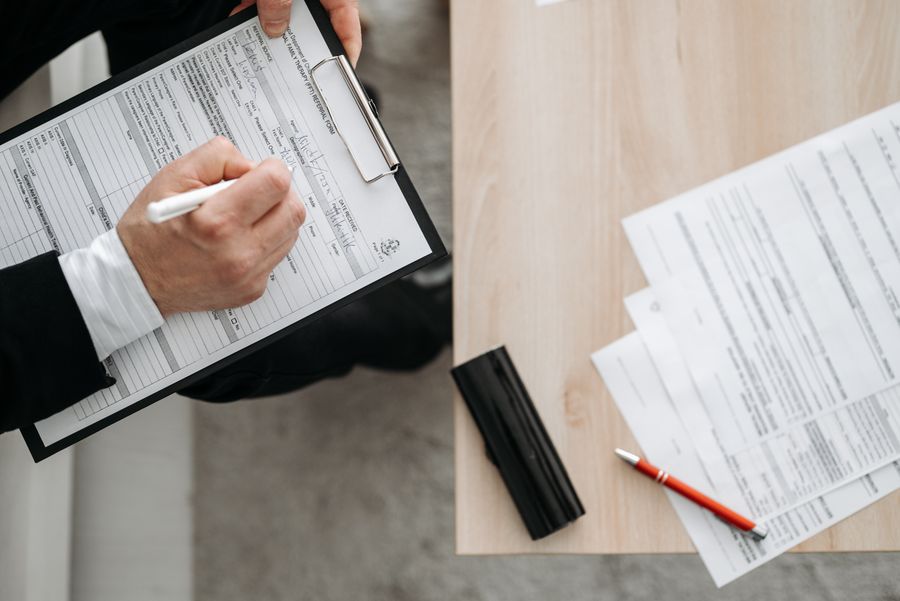
For some people A1 isn't optional, it's a requirement.
- Spouses joining a partner in Germany (family reunification) usually have to show basic German at A1 level before the visa is issued. There are exceptions, for example for partners of EU Blue Card holders and some nationalities, so always check with the German embassy in your country.
- Integration courses start at A1 and go up to B1. If you're entitled to one, the A1 part is where you'll begin.
- Some jobs and training programmes (for example in care or hospitality) ask for A1 or A2 as a minimum.
The best-known proof is the Goethe-Zertifikat A1: Start Deutsch 1. The exam tests reading, listening, writing and speaking, and it's offered by Goethe-Institutes and licensed exam centres worldwide. Fees depend on the country and centre, so check the price at the centre where you'll take it. Other recognised options include telc Deutsch A1 and ÖSD.
Honest advice: if you need the certificate for a visa, book the exam early. In many countries, A1 exam slots fill up weeks in advance, and the visa process won't move until you have the result.
How Long Does It Take to Reach A1?
It depends on how much time you put in, and whether you already speak a related language like English or Dutch. As a rough guide:
- Intensive course (3–4 hours a day, 5 days a week): about 1–2 months.
- Evening course (2 evenings a week): about 4–6 months.
- Self-study with apps alone: possible for vocabulary, but most people struggle with speaking and listening without a teacher or real conversations.
From my experience, the fastest way is to combine a course with real situations as soon as possible. Say your bakery order in German even if it's wrong. People here are usually patient when they see you're trying, and every small success makes the next one easier.
How This Series Works
Every post in A1 German in Real Life follows the same structure, so you always know where to look:
- The situation: where you are and what you need.
- The conversation: a realistic dialogue in German with the English translation underneath.
- Key phrases: the 8–10 sentences you actually need, ready to copy into your notes.
- One grammar point: only what this situation needs, explained simply.
- The cultural rules: what Germans expect, and the mistakes that make you stand out.
- Practice: a short exercise to try before you go.
All posts are collected on our German Hub, in the order we recommend learning them.
Your First 10 A1 Sentences

Before you start with the situations, learn these. You'll use them every single day.
| Guten Morgen / Guten Tag! | Good morning / Good day! (Use "Tag" from about 11:00.) |
| Entschuldigung, sprechen Sie Englisch? | Excuse me, do you speak English? |
| Ich spreche nur ein bisschen Deutsch. | I only speak a little German. |
| Können Sie das bitte wiederholen? | Can you repeat that, please? |
| Langsamer, bitte. | Slower, please. |
| Ich verstehe nicht. | I don't understand. |
| Ich hätte gern … | I would like … (the most useful phrase in Germany) |
| Was kostet das? | How much does it cost? |
| Danke schön! / Bitte schön! | Thank you! / You're welcome! |
| Tschüss! / Auf Wiedersehen! | Bye! (informal) / Goodbye! (formal) |
Just arrived? My e-book How to Start Your Life in Germany puts all the first steps (Anmeldung, bank, insurance, job, apartment) in one place, in the right order. Get it here →
Our Take
A1 won't make you feel at home in German, but it makes you independent in the small moments that fill your week, and that's when Germany starts to feel less foreign. Start with the supermarket and the train, practise the dialogues out loud, and use them the same day.
Which situation do you want us to cover next? Tell us in our Facebook group. The most requested ones go to the top of the list.
Comments
Post a Comment