- Get link
- X
- Other Apps

A1 German at the Supermarket: The Real Conversation, Phrases and Rules
We'll walk through one normal shopping trip in a German supermarket, from the bottle machine at the door to "Schönen Tag noch" at the checkout. At every stop you get the words people actually use, what to answer, and the rule nobody tells you.
My first week in Germany, I packed my shopping so slowly that the next customer's groceries started sliding into mine. The cashier said something I didn't understand, the man behind me sighed, and I just nodded at everything. I walked out with a receipt I didn't want and no idea what I'd agreed to.
The good news: the same five or six questions come up every single time. Learn them once and the supermarket becomes the most relaxed part of your week.
1 · Bottle return2 · The aisles3 · Fruit & veg4 · Bakery counter5 · Checkout
1At the door: the bottle machine (Pfandautomat)
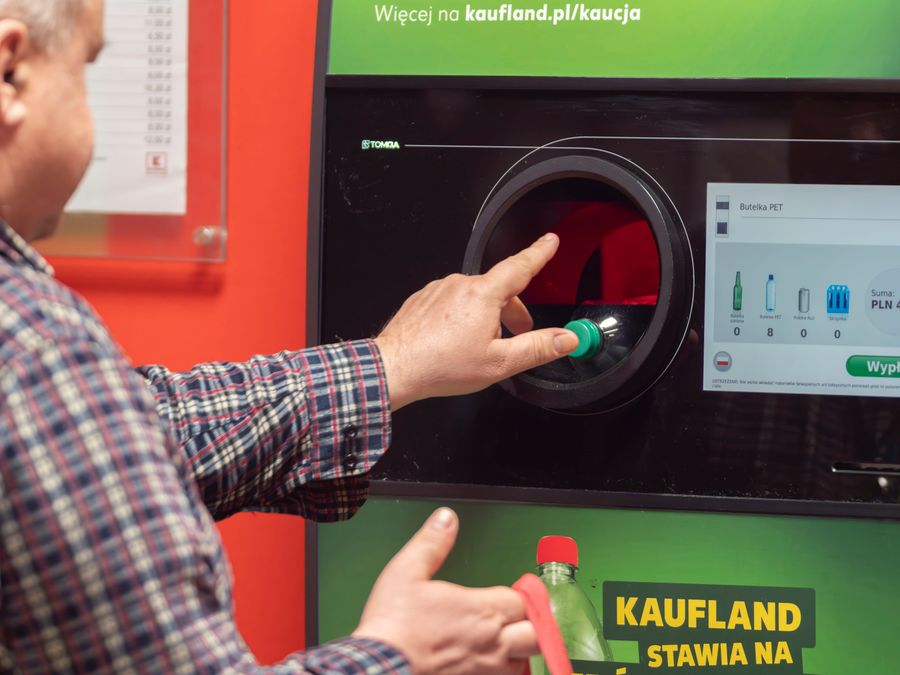
Before you even grab a trolley, many Germans stop here. Plastic bottles and cans with the Pfand logo have a 25-cent deposit, glass beer bottles 8 cents. Feed them in one by one, press the button, and the machine prints a receipt (Pfandbon). You hand it in at the checkout and the money comes off your bill.
If the machine is stuck: "Entschuldigung, der Automat funktioniert nicht." (Excuse me, the machine isn't working.) Staff hear this every day.
The rule: don't throw your Pfandbon away. It's money. And bottles without the Pfand logo go in the recycling at home, not in the machine.
2In the aisles: asking where things are
You can't find the oat milk. Find someone stacking shelves:
Entschuldigung, wo finde ich Hafermilch?Excuse me, where can I find oat milk?
Hafermilch ist in Gang fünf, neben dem Kaffee.Oat milk is in aisle five, next to the coffee.
Gang fünf. Vielen Dank!Aisle five. Thank you very much!
Gern geschehen.You're welcome.
Swap "Hafermilch" for anything: Eier (eggs), Reis (rice), Toilettenpapier. If they don't have it, ask "Haben Sie …?" (Do you have …?). Signs worth knowing: Angebot (special offer), Bio (organic), Kühlregal (fridge section), Tiefkühlware (frozen food).
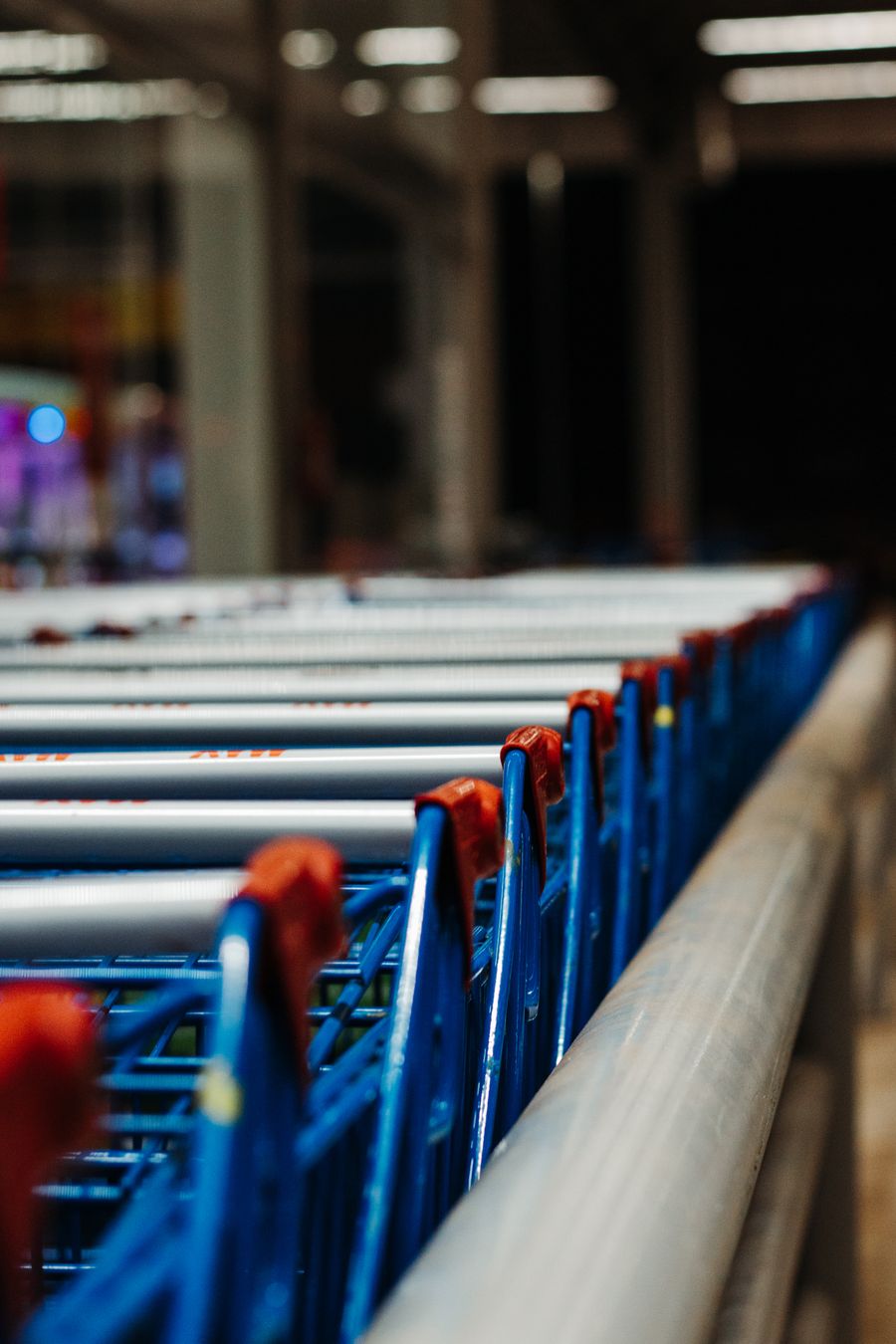
The rule: trolleys are chained together. Put a 1-euro coin in the lock to release one; you get it back when you return the trolley.
3Fruit and vegetables: the scale
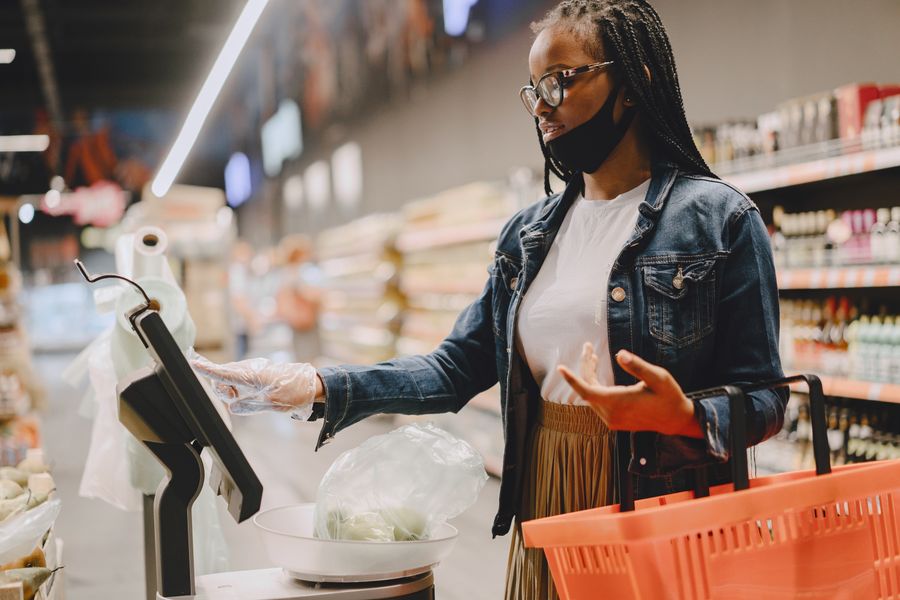
In some supermarkets you weigh loose fruit and vegetables yourself. Put the bag on the scale, press the picture of your tomatoes, and stick the printed label on the bag. If you see the sign "Bitte wiegen", it means exactly that: please weigh it.
The rule: if there's no scale in the produce section, the cashier weighs it for you. If there is one and you skip it, expect a polite sigh and a walk back.
4The bakery counter: ordering bread rolls
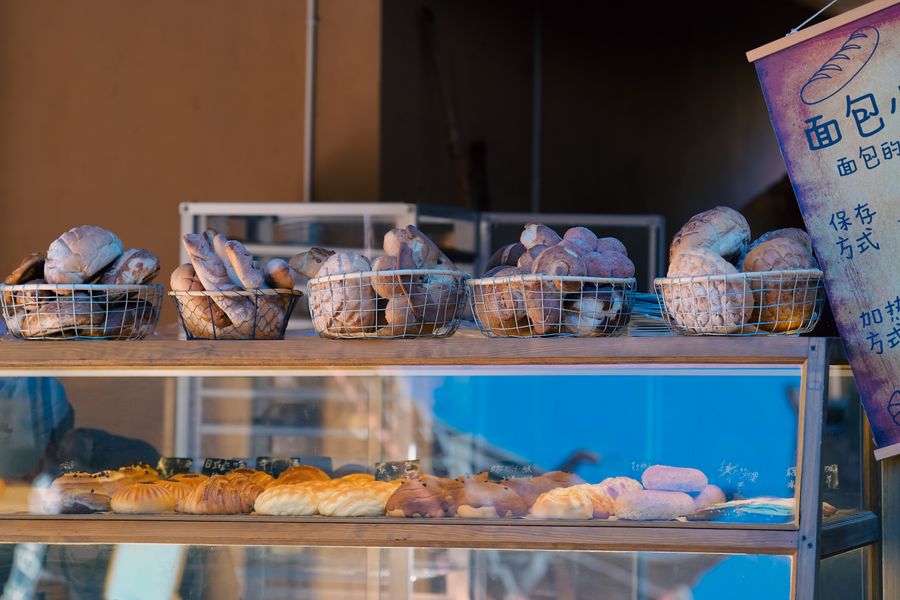
Hallo, was darf es sein?Hello, what would you like?
Ich hätte gern vier Brötchen und ein Vollkornbrot, bitte.I'd like four bread rolls and a wholegrain bread, please.
Soll ich das Brot schneiden?Should I slice the bread?
Ja, bitte.Yes, please.
Sonst noch etwas?Anything else?
Nein, danke. Das ist alles.No, thanks. That's all.
Your one grammar point for today: "Ich hätte gern" + the thing you want is the polite way to order anything in Germany. Ich hätte gern ein Brot / eine Brezel / einen Kaffee. Get "ein / eine / einen" wrong and everyone still understands you.
5The checkout (Kasse): the fast part
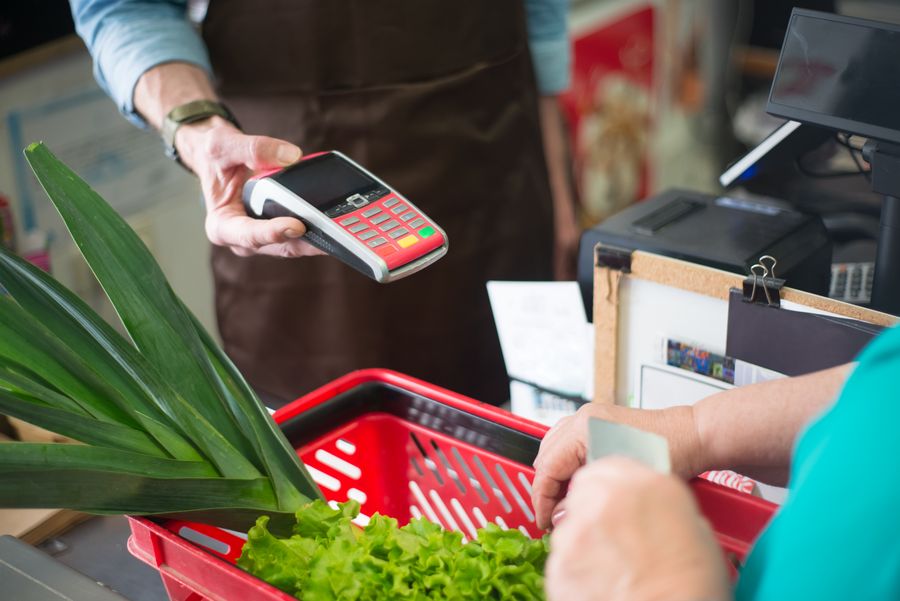
Put your shopping on the belt, then the divider bar (Warentrenner) behind it. Here's the whole conversation, which takes about thirty seconds:
Hallo! Sammeln Sie Punkte?Hello! Do you collect points?
Nein, danke.No, thanks.
Brauchen Sie eine Tüte?Do you need a bag?
Nein, ich habe eine Tasche dabei.No, I've brought a bag.
Das macht dreiundzwanzig Euro vierzig. Mit Karte oder bar?That's 23.40 euros. By card or cash?
Mit Karte, bitte.By card, please.
Möchten Sie den Kassenbon?Would you like the receipt?
Nein, danke. Schönen Tag noch!No, thanks. Have a nice day!
Danke, Ihnen auch. Tschüss!Thanks, you too. Bye!
The rule: at Aldi and Lidl the cashier scans at full speed. Don't try to pack at the till. Put everything straight back in the trolley, pay, and pack calmly at the shelf near the exit. And if you hear "Kasse drei ist jetzt geöffnet", a new checkout just opened: move.
KASSENBON
23,40 €dreiundzwanzig Euro vierzig
47,10 €siebenundvierzig Euro zehn
8,95 €acht Euro fünfundneunzig
Why it sounds strange: from 21 to 99, German says the small number first. 23 is "three-and-twenty". Didn't catch it? Look at the display on the till. Everyone does.
Your shopping-list challenge
Next time you go, try to say all five out loud:
- Ask where the eggs are.
- Order three bread rolls at the bakery.
- Tell the cashier you don't need a bag.
- Say you want to pay by card.
- Wish the cashier a nice day.
Answers: 1) Entschuldigung, wo finde ich Eier? 2) Ich hätte gern drei Brötchen, bitte. 3) Ich brauche keine Tüte. 4) Mit Karte, bitte. 5) Schönen Tag noch!
Sundays are the one day this whole conversation can't happen: almost every supermarket is closed, apart from shops in big train stations. Food is one of the biggest monthly costs here. See what a realistic budget looks like in our Cost of Living in Germany guide.
New to the series? Start with What Is A1 German, and What Can You Actually Do With It? Then take the next trip: A1 German for Buses, Trains and Tickets. All levels are on the German Hub.
Just arrived? My e-book How to Start Your Life in Germany puts all the first steps in one place, in the right order. Get it here →
Comments
Post a Comment