- Get link
- X
- Other Apps
GERMAN BUREAUCRACY · GERMANY
Germany Will Actually Fine You for Using the Wrong Bin: The Complete Recycling Guide
Which bin gets a glass jar, and which one gets an old phone, is not a suggestion in Germany — it's enforced, and in 2026 the electronics rule got a lot sharper.
Most expats hear it as a joke at first: "be careful, the neighbors will report you for putting the wrong thing in the wrong bin." It is not a joke. Germany's waste-sorting system is genuinely enforced, genuinely detailed, and genuinely capable of costing you real money if you ignore it — and in 2026, the rules around electronics disposal specifically got a lot sharper. Here's how the system actually works, and what it can actually cost you to get it wrong.
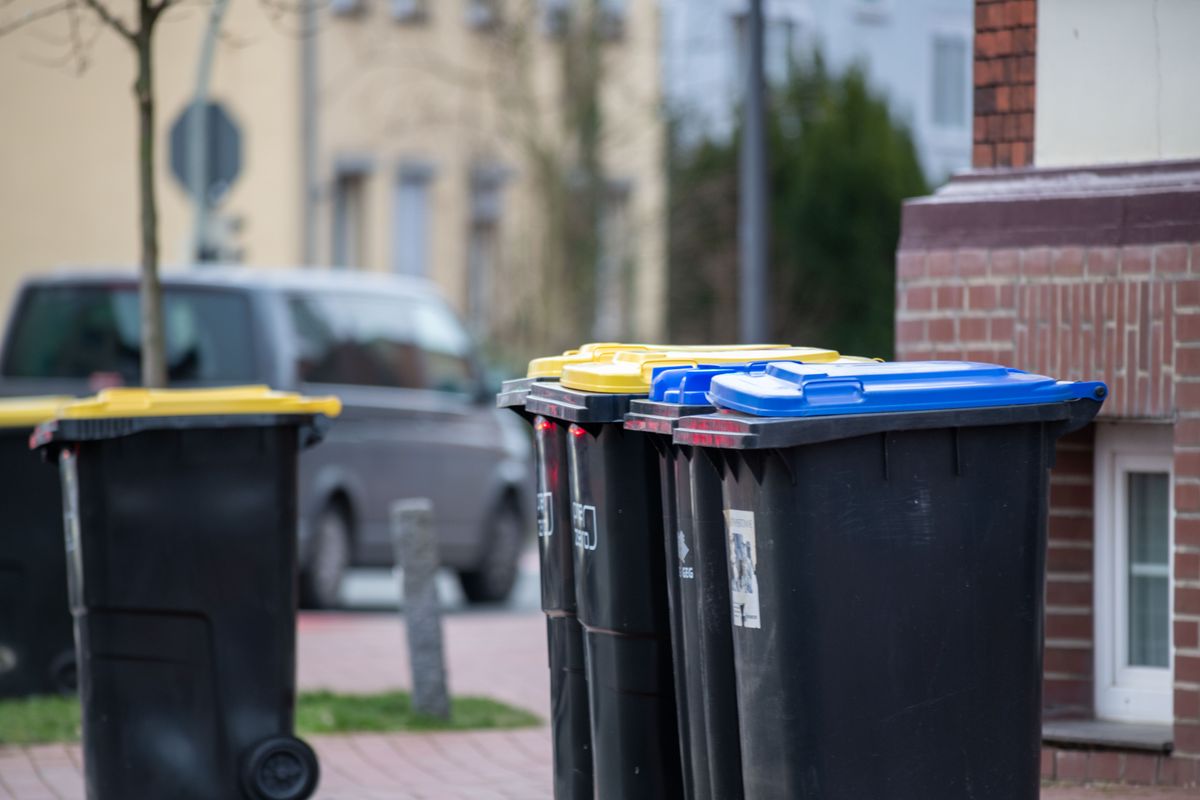
The Bins You'll Actually Deal With
Restmüll (black/grey bin). Everything that doesn't sort elsewhere: hygiene products, broken ceramics, vacuum bags, cigarette butts.
Biomüll (brown/green bin). Food scraps, coffee grounds, garden waste — no packaging, no plastic "biodegradable" bags unless certified.
Papier (blue bin). Paper, cardboard, newspapers, magazines — flattened, no greasy pizza boxes.
Gelbe Tonne / Gelber Sack (yellow). Packaging: plastic, Tetra Pak, metal tins, yoghurt cups — rinsed, not full products.
Glascontainer (public bins, sorted by color). Bottles and jars without Pfand — sorted white/brown/green, no ceramics or window glass.
One easy rule that resolves most confusion: if it still has Pfand on it, it doesn't go in any household bin at all — it goes back to the shop.
What It Actually Costs to Get It Wrong
Fines for waste violations in Germany are called Bußgeld, and the amount depends heavily on what you did and which Bundesland you're in — this is not a single federal price list.
Minor sorting mistakes. Glass in the Gelbe Tonne, food waste in Restmüll: usually a warning on a first offence, sometimes a small fine in the €10–100 range, and often just an extra collection charge passed on by your Hausverwaltung if the whole bin gets contaminated.
Illegal dumping in public spaces or nature (Wilder Müll). This is where it gets serious — fines commonly range up to €1,500 or more, and repeat or large-scale dumping can go higher.
Electronic waste (new rule from January 1, 2026). E-waste can no longer go in household bins at all. Fines vary sharply by state — as low as €10 in Mecklenburg-Vorpommern, up to €2,500 in Hesse and Thuringia for a single item, and up to €10,000 in Saxony if multiple devices are involved.
🇩🇪 Curiosity fact: Baden-Württemberg and Bavaria are consistently reported as the strictest enforcers, especially for repeat offenders — and "I didn't know the rule" is not treated as a meaningful defence in either state.
Where Old Electronics Actually Go
1
Back to the retailer.By law (ElektroG), shops selling electronics above a certain size must take back old devices, often for free even without a new purchase.
2
The Wertstoffhof.Your local municipal recycling center takes electronics, batteries, paint, and bulky items for free — check your city's opening hours online first.
3
Sperrmüll pickup.For large appliances, schedule a bulky-waste collection through your city's waste authority — usually a paid but simple booking.
Practical Tips Nobody Tells You
Shared bins are genuinely inspected. A contaminated bin can raise disposal fees for the whole building, and landlords will not be shy about passing that on to tenants.
Don't trust a single-stream habit from home. If your previous country sorted everything into one bin, assume nothing here transfers — start from this guide's table, not old habits.
Keep a small Altglas bag by the door. Public glass banks have quiet hours (usually evenings and Sundays) — check the schedule posted on the container itself.
Why Germans take this so seriously: it's not just fear of fines — Germany recycles a genuinely high share of its household waste compared to most of Europe, and the system only works because almost everyone sorts correctly almost all the time.
Got a recycling story that still confuses you two years in? You're not alone — drop it in the comments or in the Find Around Facebook group.
Comments
Post a Comment